
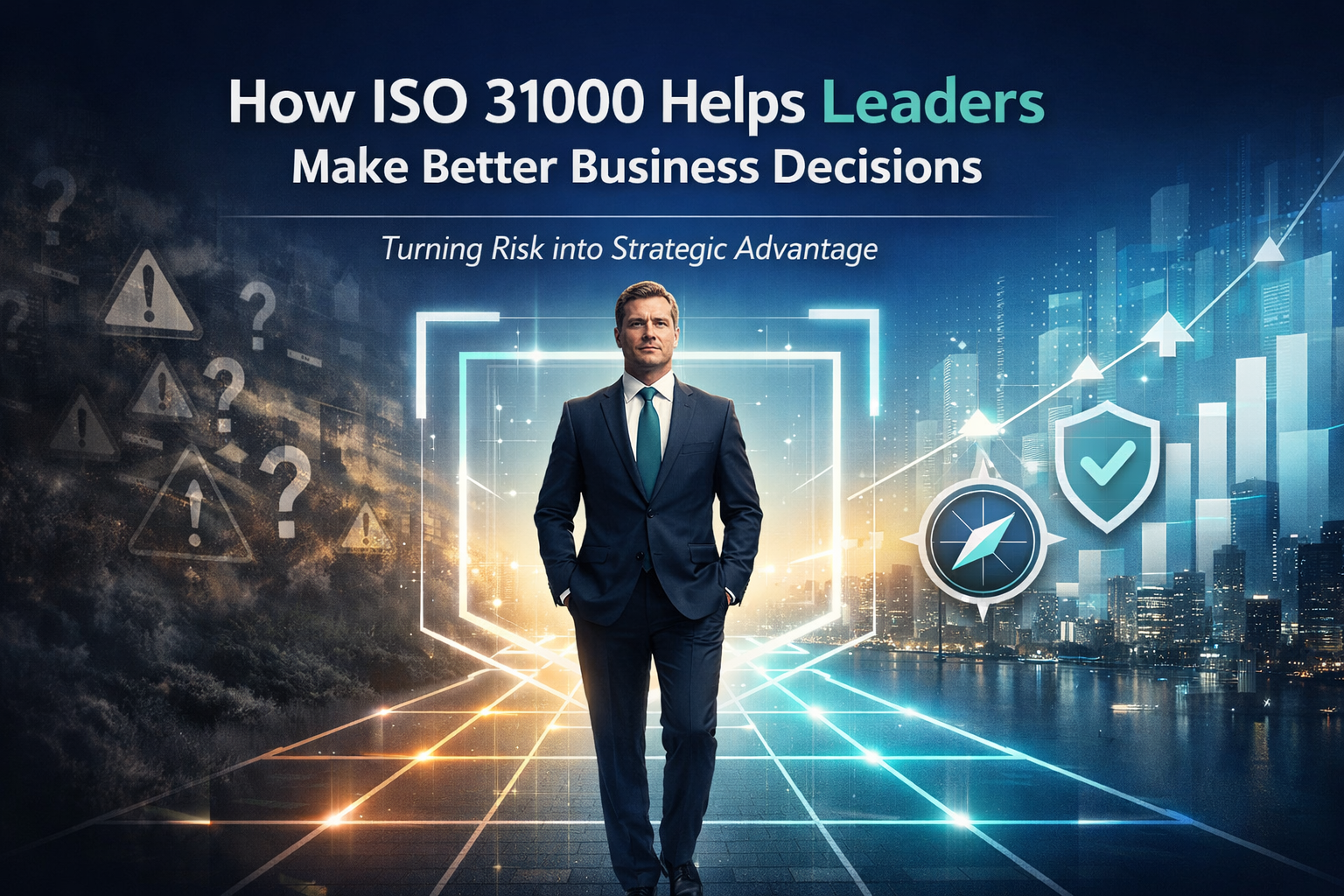
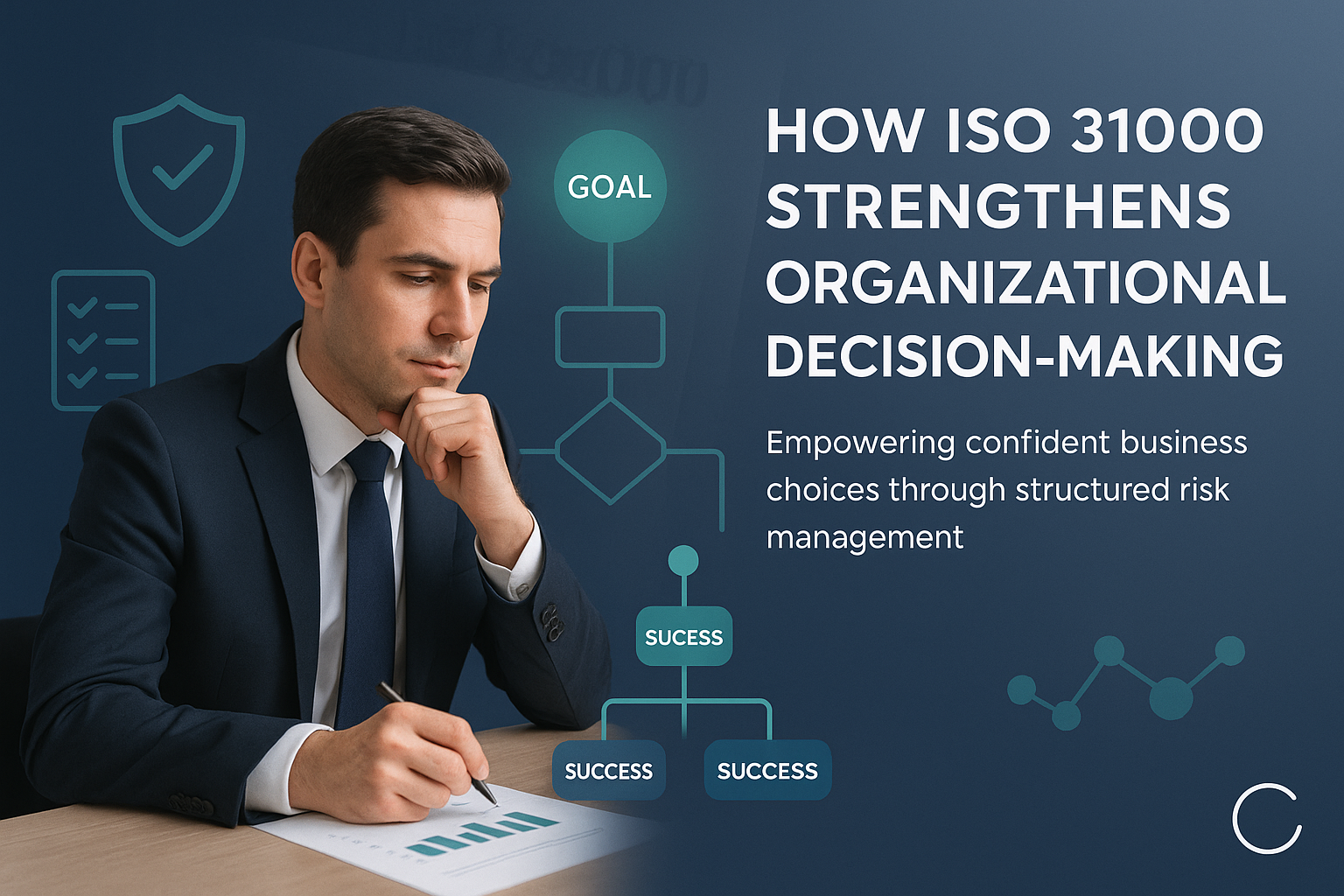
Risk is no longer confined to isolated departments or rare crisis moments. Today, organizations operate in an environment shaped by regulatory pressure, digital transformation, global supply chains, cyber threats, and fast-changing market expectations. In this context, ISO 31000 has emerged as one of the most widely used and respected frameworks for managing risk in a structured, repeatable, and business-aligned way.
Published by the International Organization for Standardization, ISO 31000 provides principles, a framework, and a process for effective risk management. Unlike many standards, it is not industry-specific and not certifiable at the organizational level, which makes it highly flexible and universally applicable. But who actually uses ISO 31000 in practice? The answer spans industries, organization sizes, and professional roles.
Governments and Public Sector Organizations
Government bodies and public sector institutions are among the strongest adopters of ISO 31000. These organizations manage public funds, critical infrastructure, policy decisions, and citizen services—areas where unmanaged risk can have serious social and economic consequences.
ISO 31000 helps public organizations:
Identify policy, operational, and reputational risks
Improve transparency and accountability
Align risk decisions with public interest and governance expectations
Many regulators and government agencies use ISO 31000 as a reference framework when designing national risk management guidelines, internal control systems, or audit models. For professionals working in the public sector, ISO 31000 training is often seen as a foundation for modern governance and compliance roles.
Large Enterprises and Multinational Corporations
Large organizations face complex risk landscapes: regulatory obligations across regions, cybersecurity threats, supply chain disruptions, financial volatility, and ESG-related expectations. For these organizations, ISO 31000 provides a common language for risk across departments and geographies.
Multinational corporations use ISO 31000 to:
Integrate risk management into strategic planning
Support enterprise risk management (ERM) programs
Improve board-level risk reporting and decision-making
Align risk practices across subsidiaries
While some enterprises combine ISO 31000 with sector-specific standards, the framework often acts as the umbrella model that connects strategy, operations, compliance, and performance management.
Small and Medium-Sized Enterprises (SMEs)
ISO 31000 is not just for large organizations. SMEs increasingly adopt it because it is principle-based rather than prescriptive, making it scalable and practical even with limited resources.
For SMEs, ISO 31000 helps:
Anticipate operational and financial risks before they escalate
Make better investment and growth decisions
Build resilience against market and regulatory changes
Improve credibility with clients, partners, and investors
Many SMEs begin their journey through an ISO 31000 course or structured ISO 31000 training program, using the framework to move from reactive problem-solving to proactive risk thinking.
Regulated Industries: Finance, Healthcare, Energy, and IT
Highly regulated industries rely heavily on ISO 31000 because risk management is central to compliance and continuity.
Financial services use ISO 31000 to support credit risk, operational risk, fraud prevention, and regulatory compliance.
Healthcare organizations apply it to patient safety, data protection, and clinical governance.
Energy and utilities use it to manage safety, environmental, and infrastructure risks.
IT and technology companies align ISO 31000 with cybersecurity, service continuity, and digital transformation risks.
In these sectors, ISO 31000 certification at the individual level is often valued as proof that professionals understand structured risk assessment and governance expectations.
Project Managers and Program Leaders
Projects are inherently risky—budgets, timelines, scope, and stakeholder expectations are constantly under pressure. Project managers use ISO 31000 to establish consistent risk identification, analysis, and treatment practices across projects and portfolios.
ISO 31000 supports:
Early identification of project threats and opportunities
Better prioritization of risks based on impact and likelihood
Stronger communication with sponsors and stakeholders
Many professionals complement project management credentials with an ISO 31000 certification to strengthen their risk decision-making capabilities.
Risk, Compliance, Audit, and Governance Professionals
Risk managers, internal auditors, compliance officers, and governance professionals are among the most direct users of ISO 31000. The framework provides a conceptual backbone for designing risk registers, control systems, audit plans, and reporting structures.
ISO 31000 training helps these professionals:
Move beyond checklist-based compliance
Connect risks to strategic objectives
Improve consistency in risk evaluation and reporting
Support leadership with actionable risk insights
As organizations mature, they increasingly expect risk professionals to have completed a recognized ISO 31000 course or hold an ISO 31000 certification.
Consultants, Advisors, and Trainers
Management consultants and independent advisors use ISO 31000 as a trusted framework when helping clients design or improve risk management systems. Because the standard is globally recognized, it provides credibility and a common reference point across industries and regions.
For consultants, ISO 31000 certification:
Demonstrates subject-matter expertise
Builds client trust
Enables structured, repeatable advisory approaches
Trainers also rely on ISO 31000 to design practical learning programs that translate risk theory into real-world application.
Individuals Building Risk-Focused Careers
ISO 31000 is increasingly used by individuals—not just organizations. Professionals in strategy, operations, quality, information security, sustainability, and leadership roles pursue ISO 31000 certification to strengthen their decision-making skills and career prospects.
An ISO 31000 course helps individuals:
Understand risk as part of everyday business decisions
Improve cross-functional collaboration
Speak the language of senior management and boards
Stand out in competitive job markets
Because ISO 31000 applies across industries, the certification remains relevant even as professionals change roles or sectors.
Why ISO 31000 Certification Has Such Broad Adoption
The reason ISO 31000 is used so widely lies in its design. It does not tell organizations what risks to manage; it teaches them how to think about risk. Its focus on principles, leadership integration, and continuous improvement makes it adaptable, future-ready, and aligned with modern business realities.
Final Thoughts
ISO 31000 is used by governments, enterprises, SMEs, regulated industries, project teams, consultants, and individual professionals worldwide. Whether implemented at an organizational level or learned through ISO 31000 training and certification, the framework provides a powerful foundation for managing uncertainty with confidence.





Write a comment ...