
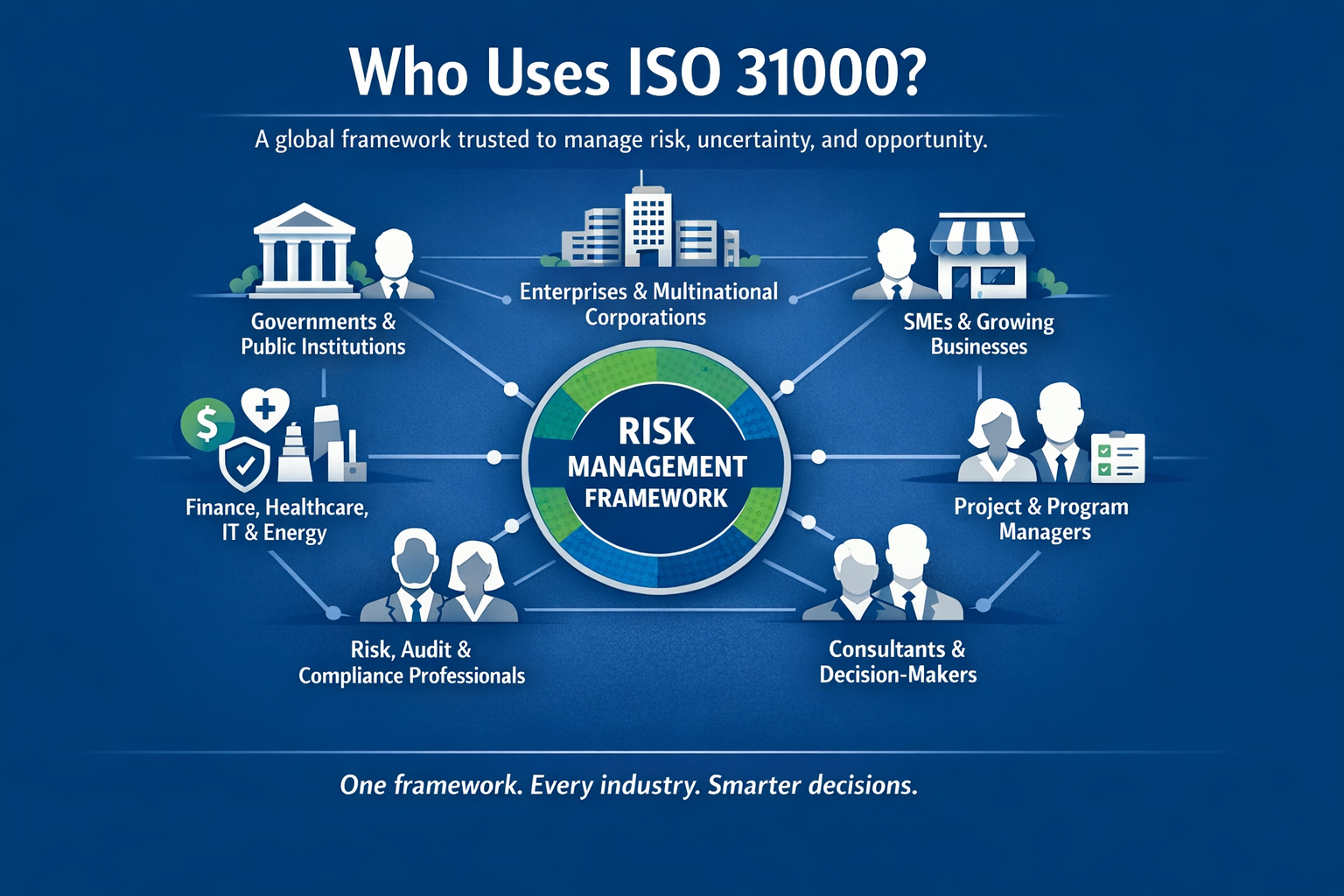
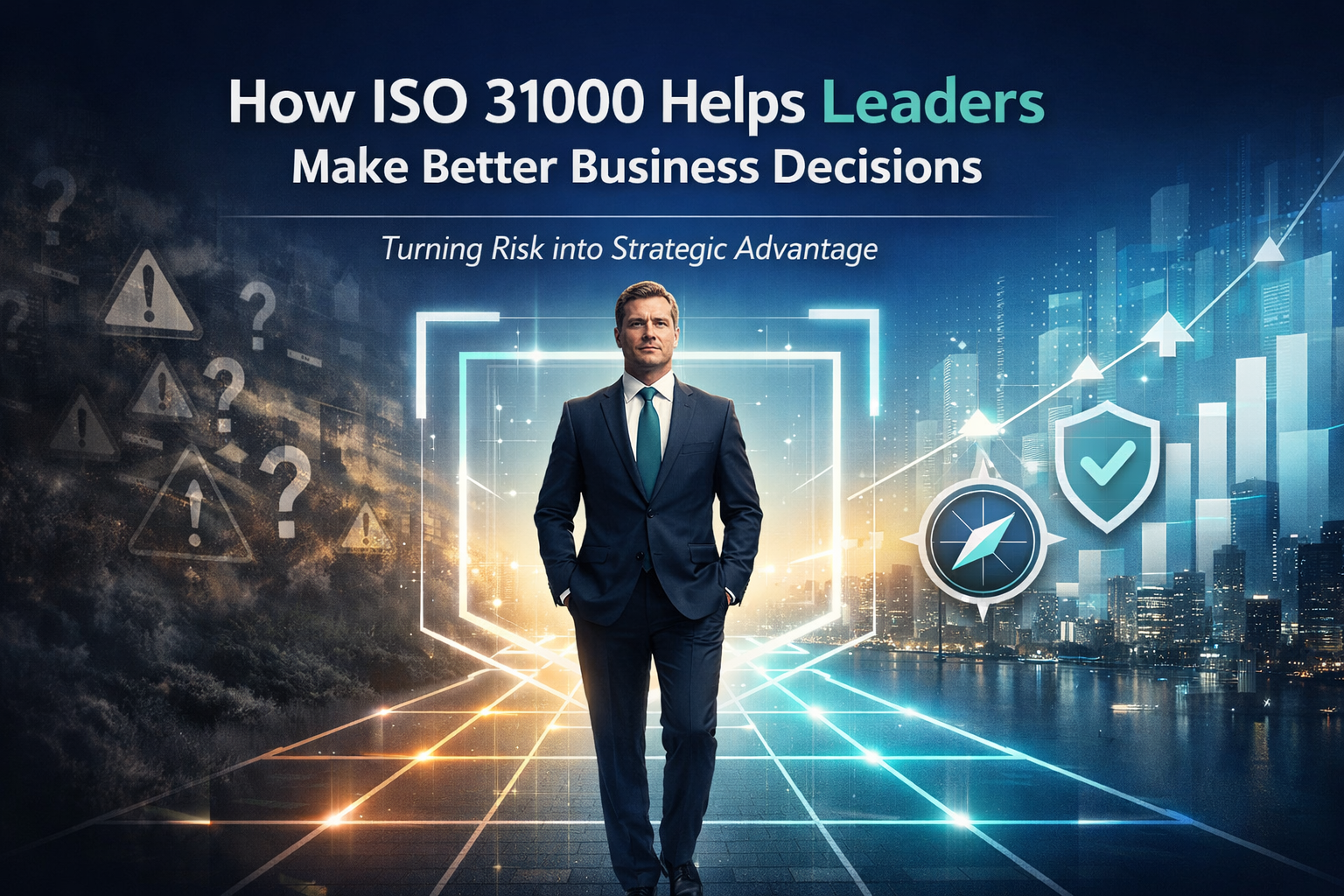
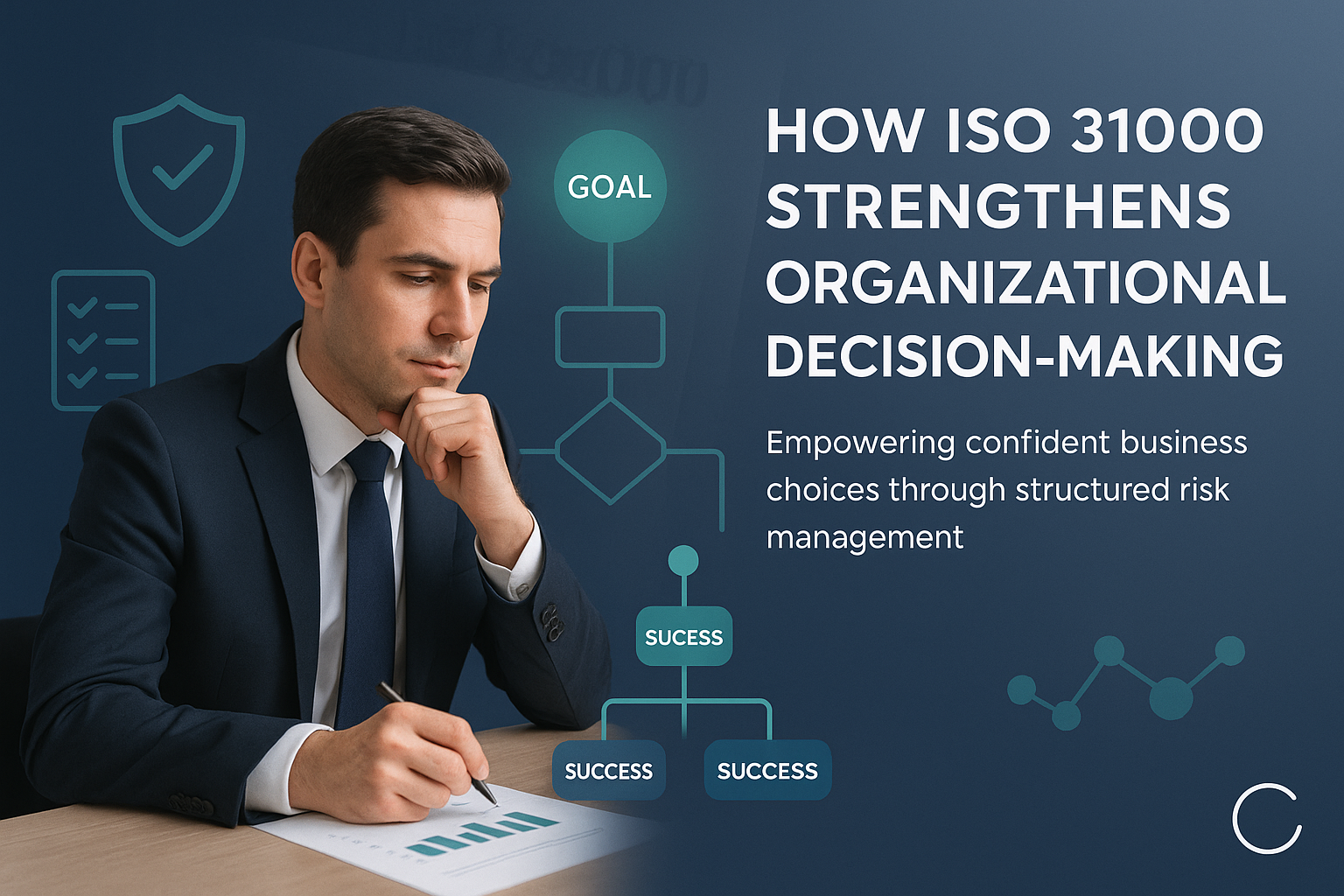
In today’s complex and uncertain business environment, organizations can no longer treat risk management as a separate or reactive function. Strategic decisions—such as market expansion, digital transformation, mergers, new product launches, or major investments—carry significant uncertainty. ISO 31000 provides a globally recognized framework that helps organizations integrate risk thinking directly into strategic decision-making, ensuring that opportunities are pursued with clarity, control, and confidence.
Why Risk Must Be Embedded in Strategy
Traditional risk management often focuses on operational or compliance risks after decisions are already made. This approach limits its value. Strategic decisions shape the long-term direction of an organization, and unmanaged risks at this level can lead to financial loss, reputational damage, regulatory failure, or even organizational collapse.
ISO 31000 shifts the mindset from “risk avoidance” to “risk-informed decision-making.” It encourages leaders to consider uncertainty as a natural part of strategy rather than an obstacle. By embedding risk management into governance, planning, and leadership processes, organizations are better equipped to balance innovation with resilience.
How ISO 31000 Supports Strategic Decisions
ISO 31000 is principles-based, making it highly adaptable to different industries and organizational sizes. When applied to strategic decision-making, the framework adds structure, transparency, and consistency.
1. Establishing Context for Strategic Choices
ISO 31000 begins by defining internal and external contexts. For strategic decisions, this means understanding market conditions, regulatory environments, stakeholder expectations, organizational capabilities, and risk appetite. This context ensures decisions are aligned with business objectives and tolerance levels.
2. Identifying Strategic Risks and Opportunities
Strategic risks include market volatility, competitive threats, geopolitical changes, technology disruption, and ESG concerns. ISO 31000 encourages organizations to identify both risks and opportunities early, enabling leadership to make informed trade-offs rather than relying on assumptions.
3. Evaluating Impact on Objectives
Through risk analysis and evaluation, decision-makers can assess how uncertainties may affect strategic goals. This structured evaluation helps prioritize initiatives, allocate resources effectively, and avoid decisions that expose the organization to unacceptable risk.
4. Risk Treatment as a Strategic Enabler
Risk treatment under ISO 31000 is not about stopping initiatives—it is about improving them. Leaders can choose to mitigate, share, accept, or even increase risk when justified. This approach supports smarter investments and sustainable growth.
5. Continuous Monitoring and Review
Strategic decisions are not static. ISO 31000 emphasizes continuous monitoring, allowing organizations to adapt strategies as conditions change and new risks emerge.
Benefits of Integrating ISO 31000 with Strategy
Improved quality and consistency of executive decisions
Stronger alignment between risk appetite and business objectives
Better communication between leadership, boards, and stakeholders
Enhanced organizational resilience and long-term sustainability
Increased confidence when pursuing innovation and change
Organizations that integrate ISO 31000 into strategic decision-making are more proactive, agile, and prepared for uncertainty.
Why ISO 31000 Certification Is Important
ISO 31000 certification is important because it validates an individual’s or organization’s ability to apply structured, internationally recognized risk management practices. For professionals, certification demonstrates advanced understanding of enterprise risk management, governance, and strategic alignment—skills highly valued by employers and leadership teams.
For organizations, having ISO 31000-certified professionals strengthens decision quality, improves risk governance, and builds trust with regulators, partners, and stakeholders. Certification also ensures consistent application of risk principles across departments, reducing silos and improving accountability.
Most importantly, ISO 31000 certification empowers professionals to shift conversations from fear-based risk discussions to value-driven strategic insights, making risk management a true business enabler rather than a compliance exercise.
Conclusion
Integrating ISO 31000 with strategic decision-making transforms how organizations approach uncertainty. It ensures that risks and opportunities are considered at the highest level, supporting informed choices, sustainable growth, and long-term success. ISO 31000 certification plays a crucial role in building this capability, equipping professionals and organizations to navigate complexity with confidence and clarity.



Write a comment ...