
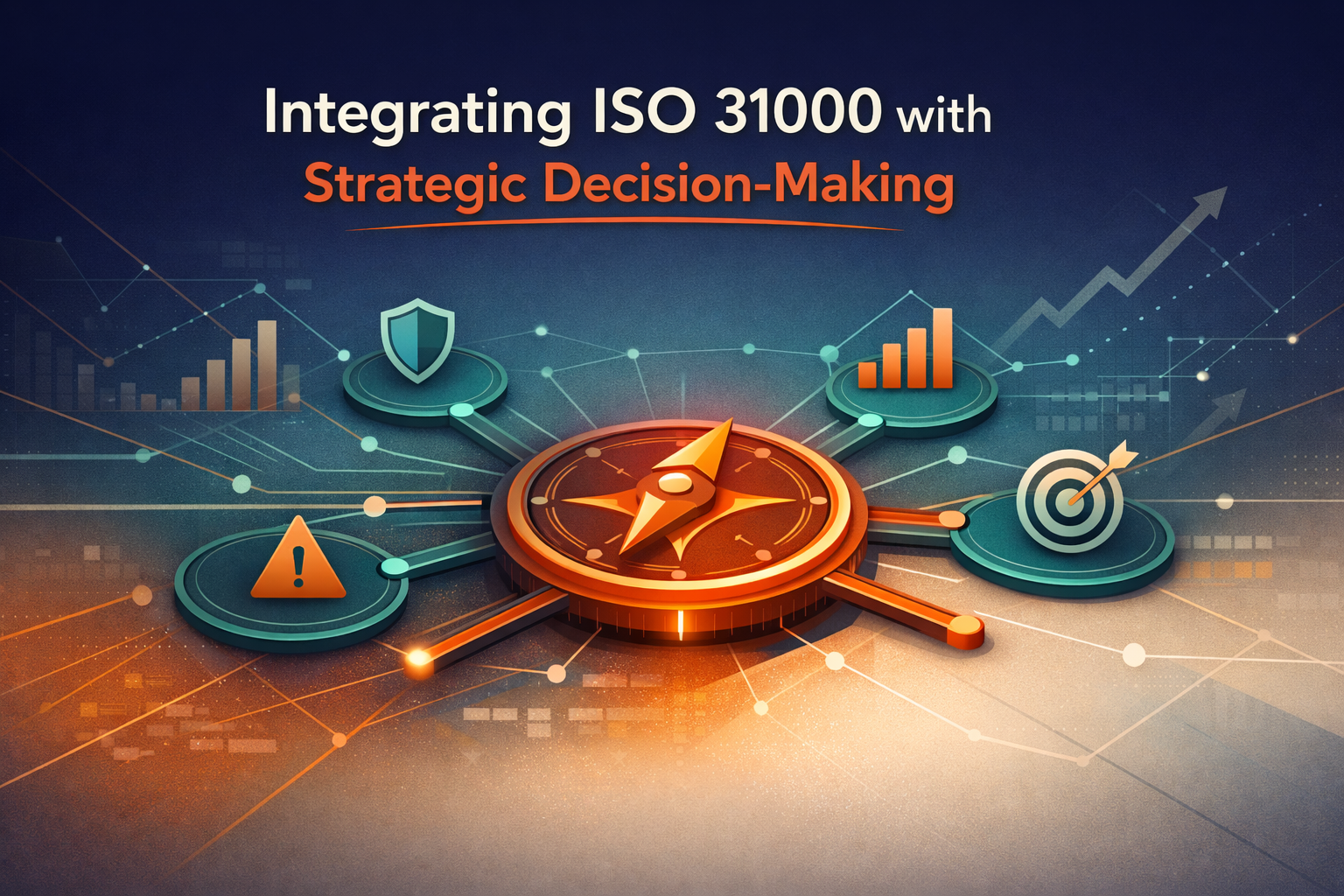
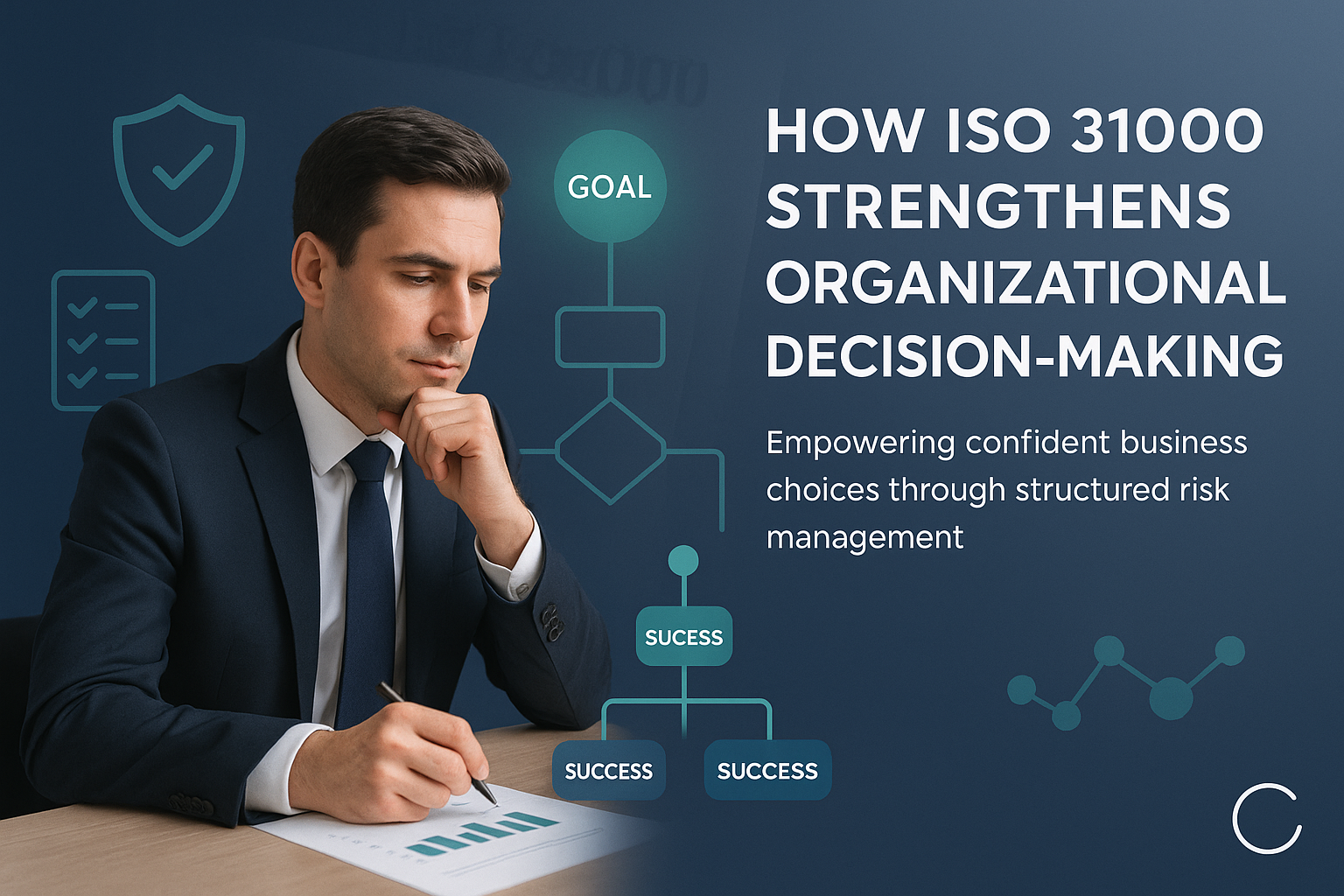
In today’s fast-changing business environment, leaders are expected to make decisions quickly—often with incomplete information and under significant uncertainty. Strategic choices related to investments, expansion, technology adoption, compliance, or crisis response can define an organization’s long-term success or failure. This is where ISO 31000, the international standard for risk management, plays a critical role. Rather than focusing on compliance, ISO 31000 provides leaders with a structured, practical approach to decision-making under uncertainty.
Risk-Based Decision-Making, Not Risk Avoidance
One of the biggest misconceptions about risk management is that it slows down decisions or promotes risk avoidance. ISO 31000 takes the opposite approach by helping leaders understand risk clearly and act decisively.
ISO 31000 enables leaders to:
Identify uncertainty before it becomes a problem
Evaluate both risks and opportunities
Make informed, calculated decisions
Avoid reactive or emotionally driven choices
This approach empowers leaders to take smart risks aligned with business objectives.
Aligning Decisions with Business Objectives
ISO 31000 ensures that risk management is integrated with strategy, governance, and performance. Decisions are no longer based purely on intuition or past experience.
Leadership decisions are aligned with:
Organizational goals and vision
Defined risk appetite and tolerance
Stakeholder and regulatory expectations
Long-term sustainability and growth
This alignment helps leaders balance ambition with control.
Improving Quality and Consistency of Decisions
The ISO 31000 risk management process—risk identification, analysis, evaluation, and treatment—creates consistency across decision-making.
As a result, leaders can:
Compare strategic options objectively
Use a common framework across departments
Justify decisions with structured analysis
Support board-level and executive discussions
Decisions become transparent, repeatable, and defensible.
Enhancing Confidence in Leadership Choices
Uncertainty often leads to hesitation or overconfidence. ISO 31000 reduces this by encouraging structured analysis and scenario evaluation.
Leaders gain confidence by:
Understanding likelihood and impact of risks
Evaluating best- and worst-case scenarios
Making evidence-based decisions
Reducing reliance on assumptions
This strengthens leadership credibility and decisiveness.
Supporting Better Stakeholder Communication
Leaders must explain decisions to boards, regulators, investors, and employees. ISO 31000 provides a clear rationale for decision-making.
It helps leaders communicate:
Why a decision was taken
What risks were considered
How risks are being managed
What trade-offs were accepted
This transparency builds trust and accountability.
Enabling Proactive Rather Than Reactive Leadership
Without structured risk management, organizations respond only after problems arise. ISO 31000 promotes early risk identification and planning.
Proactive leadership benefits include:
Fewer surprises and disruptions
Faster response to emerging risks
Improved organizational resilience
Stronger crisis preparedness
Leaders move from firefighting to foresight.
Strengthening Governance and Accountability
ISO 31000 Training defines clear roles, responsibilities, and ownership for risk.
This leads to:
Better cross-functional collaboration
Reduced silos and blind spots
Accurate and timely risk information
Stronger governance oversight
Decisions are supported by reliable inputs from across the organization.
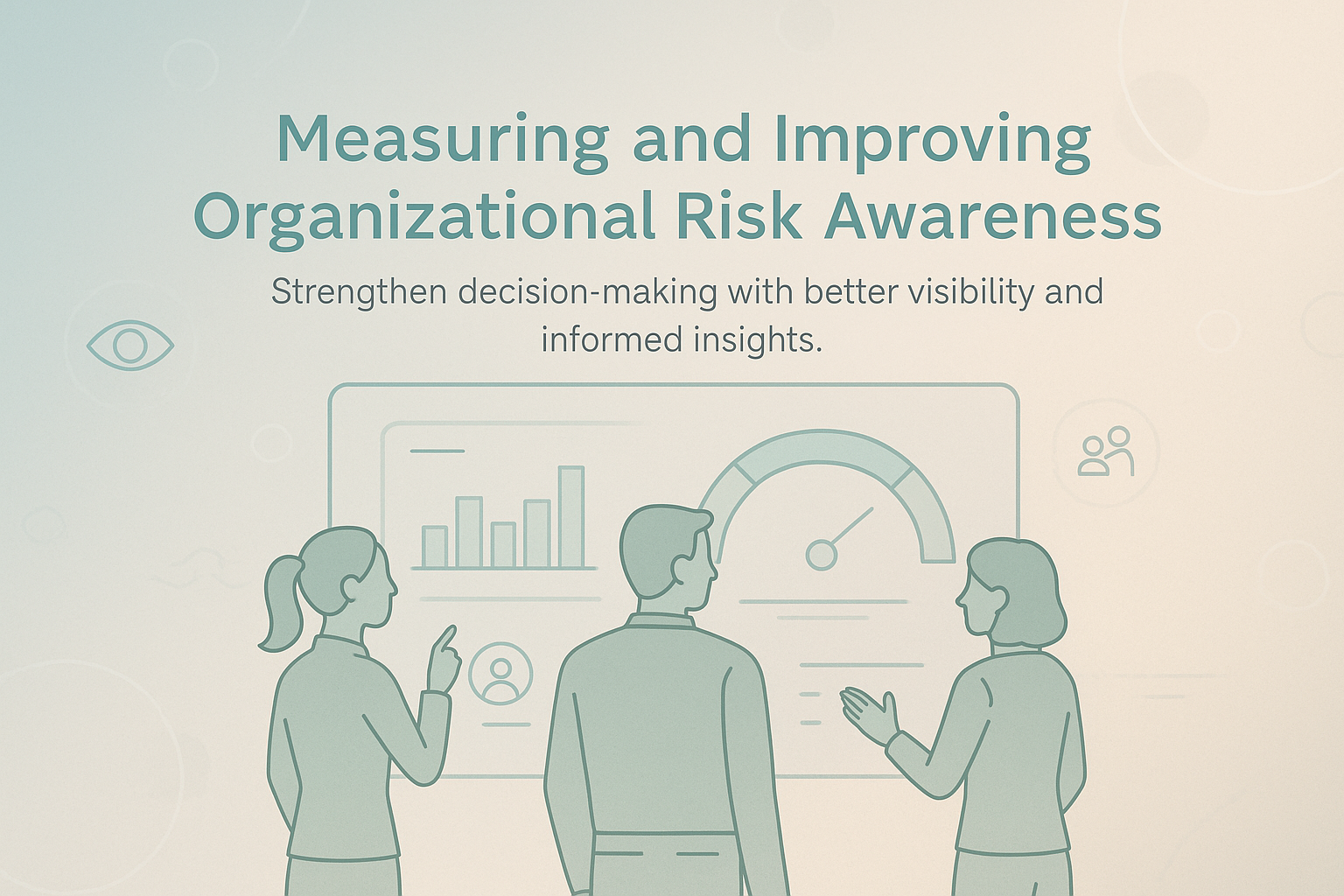
Creating a Risk-Aware Leadership Culture
When ISO 31000 principles are embedded, risk awareness becomes part of daily decision-making.
A strong risk culture encourages:
Open communication about uncertainty
Employee participation in risk discussions
Better decision quality at all levels
Continuous improvement
This cultural shift amplifies leadership effectiveness.
How ISO 31000 Certification Enhances Your Career
ISO 31000 certification positions you as a risk-informed decision-support professional, not just a compliance expert.
Career benefits include:
Increased credibility with leadership and boards
Eligibility for roles in risk, GRC, and strategy
Stronger influence in decision-making processes
Improved salary and career progression potential
Certified professionals are trusted to guide organizations through uncertainty.
Conclusion
ISO 31000 does not replace leadership judgment—it strengthens it. By providing a structured and flexible framework to manage uncertainty, ISO 31000 enables leaders to make smarter, faster, and more confident business decisions. In an unpredictable business landscape, leaders and professionals who apply ISO 31000 gain a powerful advantage by turning risk into a strategic asset rather than a barrier.



Write a comment ...