
Modern digital businesses depend on stable, scalable, and high-performing systems. As organizations adopt cloud architectures, microservices, and automation-first operations, the role of DevOps and Site Reliability Engineering (SRE) teams has become central to delivering seamless customer experiences. To ensure these teams add consistent, measurable value, tracking the right performance metrics is essential. Without data-driven evaluation, it becomes difficult to understand system health, identify bottlenecks, or improve operational maturity.
Here are the most important metrics that help organizations evaluate DevOps and reliability engineering performance—along with why the right certifications strengthen these capabilities.
1. Service Level Indicators (SLIs) and Service Level Objectives (SLOs)
SLIs such as latency, availability, throughput, and request success rate reveal real-time system behavior. SLOs define the acceptable threshold for these behaviors. Together, they provide a foundation for reliability measurement.
When DevOps and SRE teams align their work with SLOs, organizations gain clarity on what “good performance” truly means. Tracking how often SLOs are met—or violated—helps leaders assess team effectiveness and prioritize improvements. Strong SLO discipline is a hallmark of mature SRE practice.
2. Error Budgets
Error budgets quantify how much unreliability is acceptable within a given period. This metric prevents teams from over-prioritizing reliability at the expense of innovation. By tracking error budget burn rate, teams can evaluate whether their deployment practices are stable or risky.
Effective use of error budgets reflects how well teams balance feature velocity with system resilience. It also ensures that operations and development teams collaborate instead of working in silos.
3. Deployment Frequency and Change Failure Rate
High deployment frequency indicates confidence in automation pipelines, while a low change failure rate shows that new releases are stable. When these two metrics are evaluated together, they give a clear picture of DevOps maturity.
Teams with optimized pipelines deploy faster, recover quicker, and introduce fewer production issues. Measuring these indicators helps organizations understand whether their engineering processes support rapid, safe innovation.
4. Mean Time to Detect (MTTD) and Mean Time to Resolve (MTTR)
These metrics reveal how quickly teams can identify and resolve issues. A low MTTD reflects robust monitoring and observability practices. A low MTTR demonstrates strong triage skills, automation, and incident response readiness.
Reducing both metrics directly improves customer experience and minimizes financial impact. They also highlight how well SRE practices are embedded into daily operations.
5. Toil Percentage
Toil refers to repetitive, manual tasks that offer no lasting value. High toil slows down innovation and burns out engineering teams. Measuring toil percentage helps leaders understand whether their teams are working efficiently or being pulled into low-value activities.
SRE teams that consistently reduce toil become more strategic—focusing on automation, performance improvements, and long-term reliability enhancement.
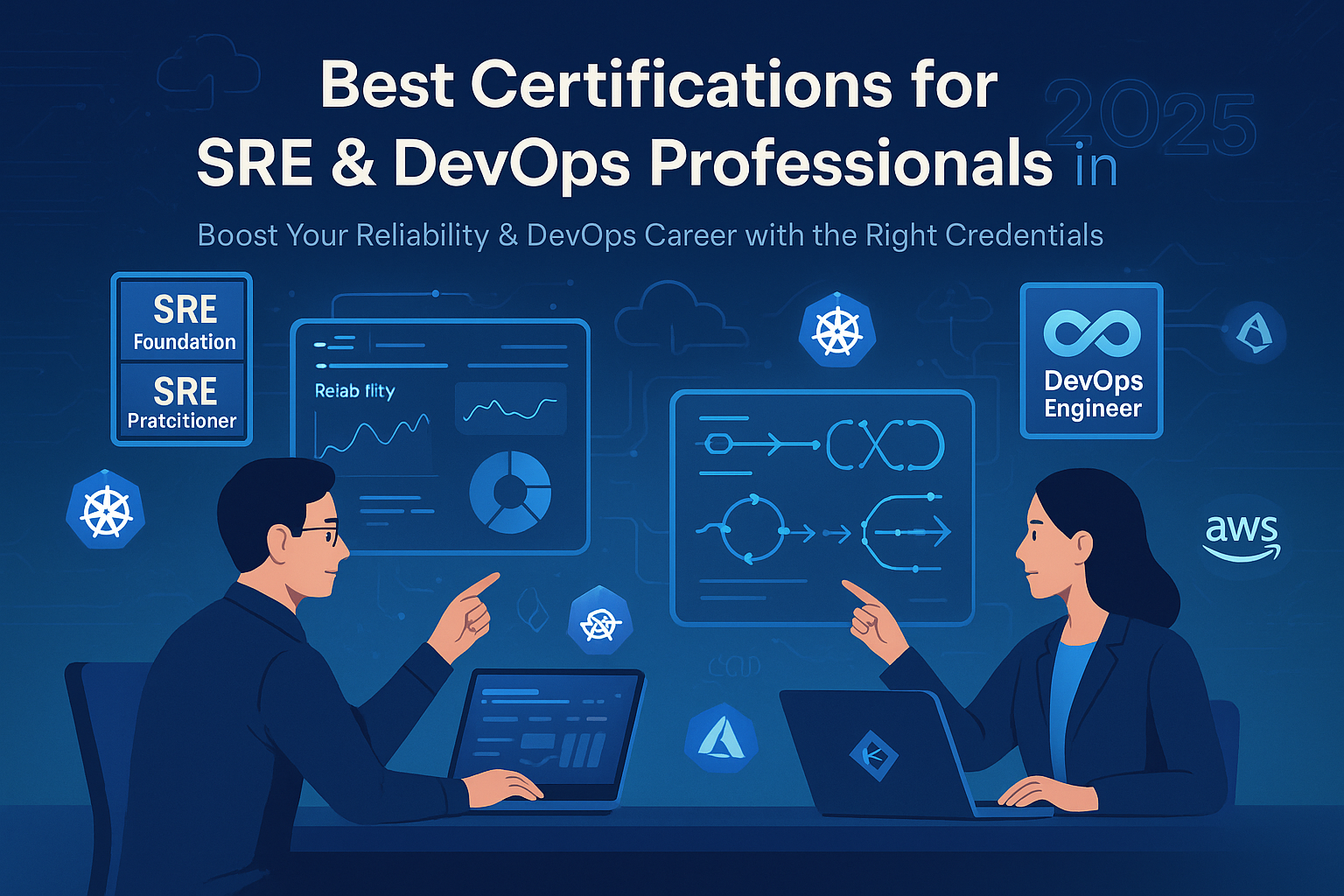
Why SRE Foundation and SRE Practitioner Certifications Matter
To work effectively with these metrics, professionals need structured knowledge of modern reliability practices. This is where certifications such as SRE Foundation and SRE Practitioner become important.
SRE Foundation Certification
This SRE Foundation Certification builds baseline knowledge of principles like SLIs, SLOs, error budgets, incident management, and toil reduction. It is crucial for those entering or transitioning into SRE roles. It gives teams a shared vocabulary and understanding, ensuring everyone contributes consistently to reliability goals.
SRE Practitioner Certification
The SRE Practitioner Certification strengthens real-world application. It teaches advanced topics like production engineering, blameless post-incident reviews, reliability automation, and metrics-driven decision-making. Professionals who hold this certification can implement, optimize, and lead SRE practices—not just understand them.
Together, these certifications help teams apply metrics correctly, interpret them accurately, and build reliability practices that support long-term system excellence.










Write a comment ...